

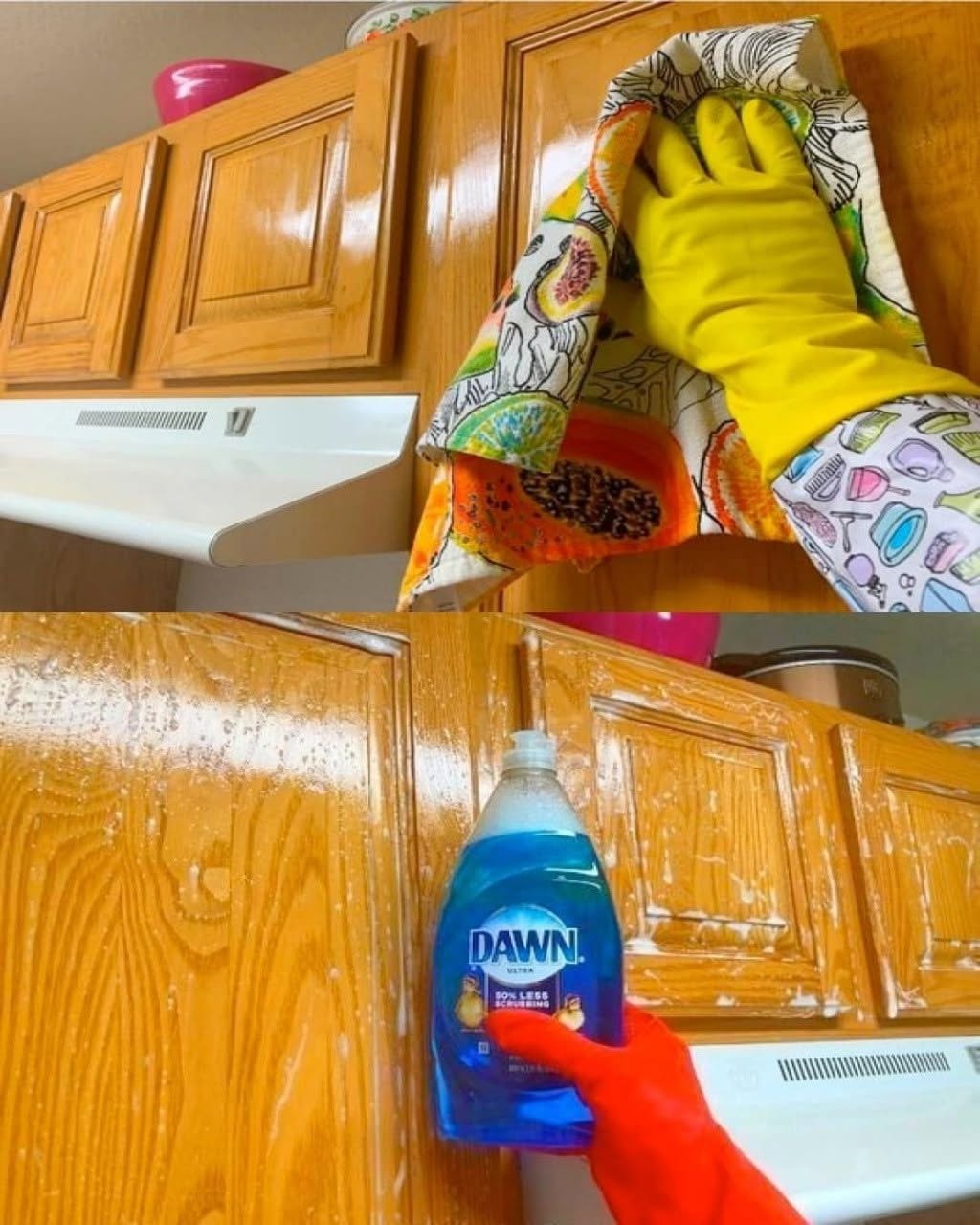
If your cabinets have thick, sticky grease buildup, one cleaning session may not be enough.
Instead of reaching for harsh chemicals, repeat the mild dish-soap cleaning process.
Let the damp cloth rest briefly on greasy areas to soften the residue, then gently wipe it away.
For grease that still won’t budge, choose a cabinet cleaner specifically labeled safe for your cabinet’s finish and follow its instructions.
Avoid abrasive powders, steel wool, and rough scrubbing pads. These can permanently damage painted or finished wood surfaces.
Mistakes to Avoid When Cleaning Kitchen Cabinets
Even common household cleaning methods can damage cabinets if used incorrectly.
1. Using too much water: Excess moisture can seep into seams and cause swelling or peeling.
2. Applying undiluted dish soap: Concentrated detergent can leave a sticky residue and may be difficult to rinse away.
3. Scrubbing with abrasive sponges: Rough materials can scratch glossy finishes and remove paint.
4. Using vinegar without checking the finish: Acidic cleaners may dull or damage certain cabinet coatings.
5. Applying cooking oil to make cabinets shine: Oils can leave a sticky film that attracts dust and grease.
6. Forgetting to dry the surface: Moisture left behind can cause long-term damage, particularly to wood and laminate edges.
How Often Should You Clean Kitchen Cabinets?
Continue reading on the next page →