
Who Should Be Cautious?
1. People with Nut Allergies
Cashew allergy is one of the most common tree nut allergies. If you have a history of tree nut allergies, avoid cashews .
2. People Prone to Kidney Stones
Cashews contain oxalates, which can contribute to calcium-oxalate kidney stones in susceptible individuals. If you have a history of stones, moderate your intake—stick to the recommended serving size .
3. People with IBS
The high FODMAP content in cashews can trigger symptoms such as bloating, gas, and diarrhea in some individuals with irritable bowel syndrome. Start with small amounts .
4. People on Certain Medications
Cashews may interact with:
Blood thinners (due to vitamin K content)
Blood pressure medications (due to potassium)
Diabetes medications (may affect blood sugar)
Always consult your doctor if you’re on medication before making significant dietary changes.
5. Anyone Watching Sodium Intake
Choose unsalted cashews to limit sodium. One ounce of roasted, salted cashews has 181 mg of sodium . Unsalted versions have 0 mg.
Raw vs. Roasted: Which Is Better?
Type Pros Cons
Raw No added oils or salt Less flavorful to some
Dry-roasted (unsalted) Enhanced flavor, no added salt Still roasted (minimal difference nutritionally)
Oil-roasted Very flavorful Adds calories from oil
Honey-roasted Delicious Adds significant sugar
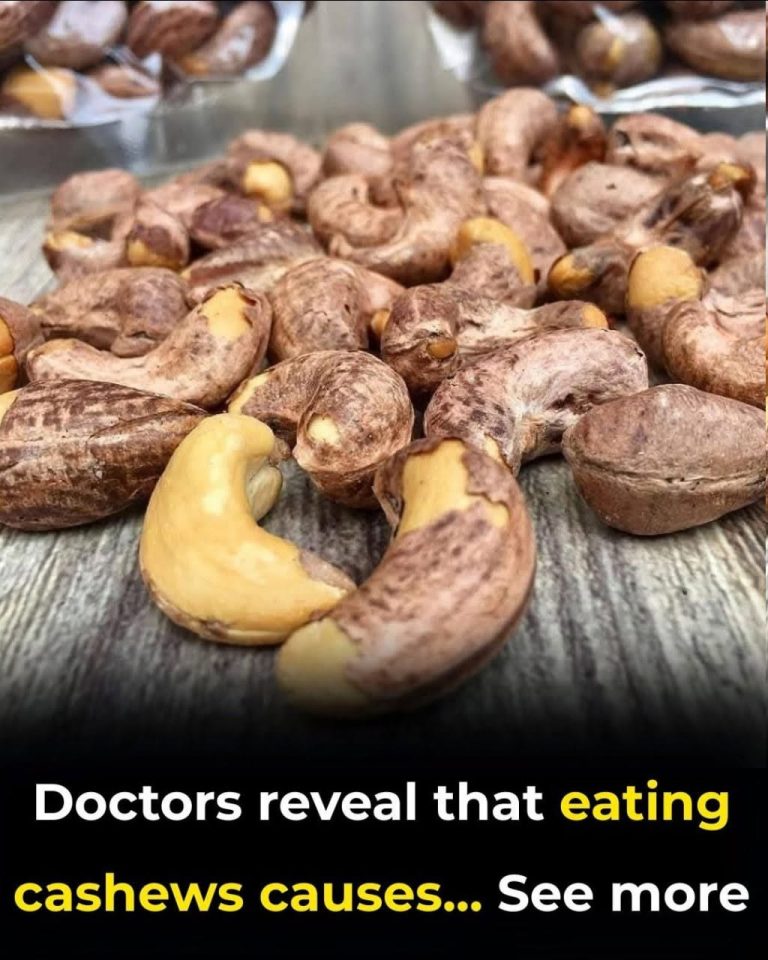
Important safety note: Raw cashews with shells contain urushiol—the same toxic oil found in poison ivy. The cashews you buy at the store have been steamed to remove this compound, making them safe to eat .
Healthiest choice: Raw or dry-roasted unsalted cashews.
Delicious Ways to Add Cashews to Your Diet
Handful as a snack – Simple and satisfying
On salads – Adds crunch and nutrition
In stir-fries – Cashews are traditional in many Asian dishes
Cashew butter – Spread on toast or apple slices
Cashew milk – A dairy-free alternative with fewer calories than cow’s milk
In homemade trail mix – With dried fruit and dark chocolate
Blended into sauces – Soaked cashews create creamy dairy-free sauces
As a crust for fish or chicken – Crushed cashews add flavor and texture
The Bottom Line
Doctors reveal that eating cashews regularly can:
Improve cholesterol levels and support heart health
Help manage blood pressure
Stabilize blood sugar and improve insulin sensitivity
Support healthy weight management when replacing less healthy snacks
Protect joints by reducing inflammation
Nourish skin, hair, and brain
It’s not a miracle food—but as part of a balanced, whole-foods diet, cashews are one of the most nutrient-dense, health-promoting nuts you can eat.
A handful a day might just be one of the simplest, most delicious things you can do for your long-term health.