

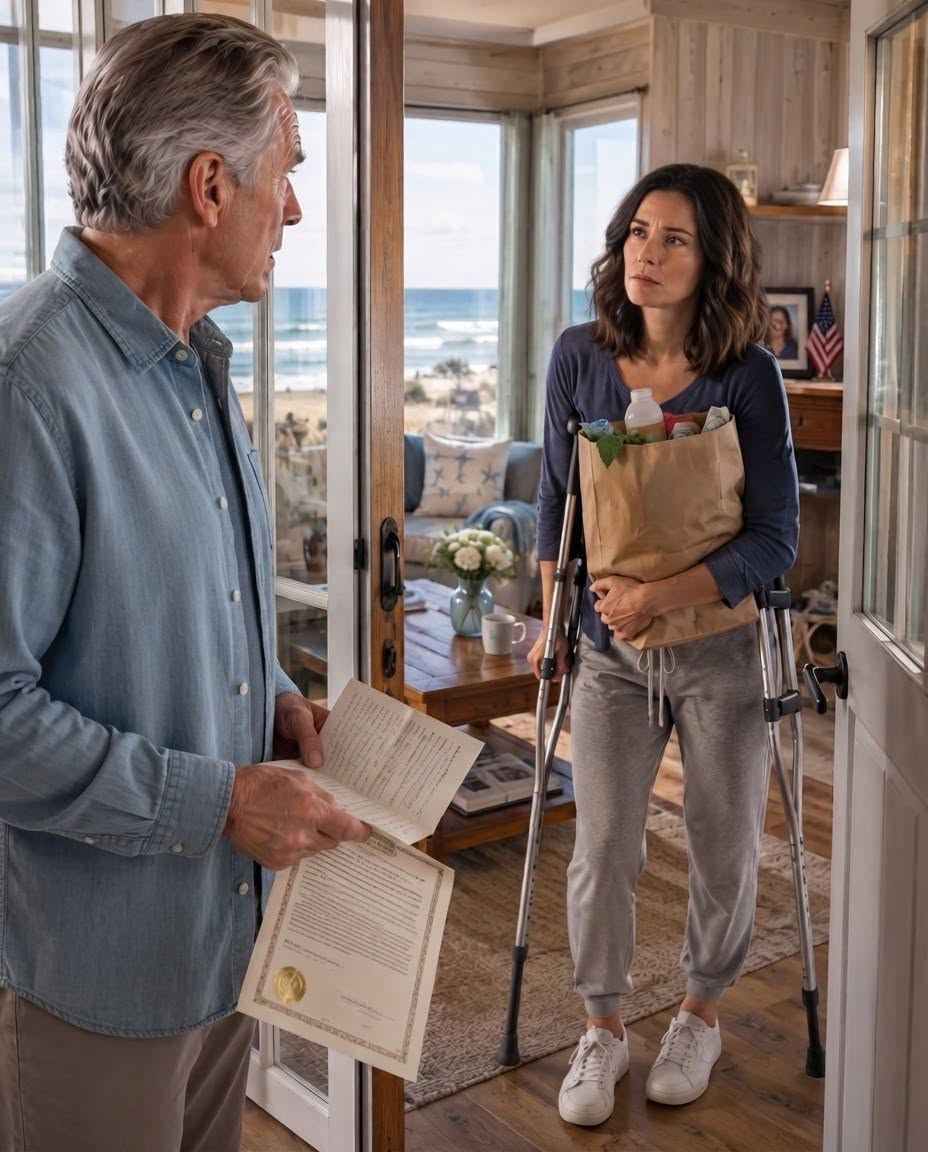
Carol’s eyes glistened, but her voice stayed calm.
“She was seventeen,” she said. “Her parents made it clear she could not bring me home. She placed me for adoption. She said it was the decision that shaped every silence in her life afterward.”
Beyond the cabin walls, the ocean rolled in steady, quiet waves.
“Helen had a daughter,” I whispered.
“Yes.”
“And she never told me.”
“No.”
I eased myself back into the chair.
The cabin seemed to tilt around me, though nothing actually moved. Not the flowers. Not the photo album. Not the curtains stirring in the sea breeze. Only my understanding of the last thirty years shifted into something completely different.
“She found me four years ago,” Carol continued. “She hired someone to help locate me. I was already sick then. I have a progressive neuromuscular condition. Some days are better than others. Insurance paid for parts of my care, but not the life around it. Helen wanted to help.”
I thought about Helen’s “charity donation.” The checkbooks she always handled herself. The weekends she claimed were women’s retreats, follow-up appointments, or quiet trips to think. The distance I had blamed on grief, aging, marriage, and time.
“You were her retreat,” I said.
Carol’s face tightened with emotion. “No. I was her regret.”
That single sentence broke me in a way Bradley’s cruelty never had.
My eyes filled with tears.
I looked back at the photographs. Helen laughing. Helen stirring soup. Helen sitting beside Carol beneath a blanket on the porch. Helen looking like someone trying to make up for an entire lifetime through ordinary afternoons.
“She talked about you,” Carol said.
I shook my head. “She lied to me.”
“Yes.” Carol didn’t soften the truth. “She did.”
Oddly enough, I appreciated that honesty more than comfort.
“She also loved you,” she added. “She said you were the only man who ever made her feel safe enough to become better, and then she spent too many years ashamed of the parts of herself she had hidden from you.”
Behind the lamp on the side table sat a small wooden box.
I recognized it instantly.
I had built that box in high school shop class. Walnut wood, rough joints, a lid that never sat quite straight. I gave it to Helen the first summer we dated with a note inside that read, for everything we’ll keep. I hadn’t seen it in decades. I assumed it had disappeared during one of our moves or been thrown away during one of Helen’s relentless cleaning sprees.
Carol noticed where I was looking.
“She kept it here,” she said. “She told me you made it for her when both of you still believed forever was simple.”
I opened the box.
Inside were letters.
Dozens of them.
Every one addressed to me.
Helen’s familiar handwriting covered each envelope, slanted and precise, just like the grocery lists, sympathy cards, and birthday notes she always wrote. The letter on top was dated two weeks before she died.
My hands shook as I unfolded it.
My dearest Eugene,
If you are reading this, then you have met Carol, and you know the truth I was too ashamed to speak while I was alive.
I am sorry.
Those three words blurred before my eyes.
I wiped them with the heel of my hand and continued.
I am sorry for making you live beside secrets. I am sorry for letting you believe my distance was your failure. It was mine. I was a frightened girl before I was your wife, and I carried that frightened girl into our marriage without ever giving you the chance to know her.
Carol is my daughter. She is not your betrayal. She is my first wound and my last chance to heal something I broke.
Please be kind to her if you can.
SEE NEXT PAGE >>>
To see the full cooking instructions, go to the next page or click the Open button (>) and don't forget to SHARE it with your friends on Facebook.