

I grabbed our wedding photograph from the mantel before one of the movers packed it away.
Helen wore a satin dress she had bought secondhand and altered herself. I stood beside her in a rented tuxedo, smiling like the luckiest fool in Ohio. We were twenty-five and twenty-eight, sunburned from our honeymoon at Lake Michigan, broke enough to count every restaurant bill, and happier than we knew how to protect.
When had that woman become someone who secretly owned a cabin, left our son a villa, and handed me nothing but keys to peeling paint and salt air?
Or had I become the stranger first?
I didn’t know.
At sunrise I loaded my pickup with the things that clearly belonged to me. My tools. My clothes. Three boxes of books Helen never cared about. My drafting table because Bradley had called it “too ugly to stage around.” A metal lockbox full of work records. The wedding photo. By noon I sat in the driveway with the engine idling, staring at the front window where Helen used to stand with her coffee while I mowed the lawn.
Bradley stood on the porch scrolling through his phone.
He never looked up.
The drive to Clearwater Beach took a little over two hours. The farther south I traveled, the softer the landscape became. Strip malls gave way to causeways, blue water, bait shops, seafood shacks, stucco homes, palm trees bending over parking lots, and tourists in rental cars driving as if the ocean itself had confused them. I kept the windows cracked, letting the salty breeze fill the truck.
Driftwood Lane wasn’t the kind of street people stumbled onto. It was narrow, sandy, and half hidden beneath sea oats. Some homes had been rebuilt into bright vacation rentals with glass balconies and outdoor showers. Others looked like they had been waiting decades for someone to decide their fate.
Number 127 belonged to the second group.
I parked where a driveway had probably existed once. Sand had reclaimed most of it. Weeds pushed through broken shells. The cabin sat behind a leaning fence, its faded blue paint curling away, porch steps sagging, roofline warped by years of weather. Two front windows were boarded shut. A rusted mailbox hung open like a weary mouth.
Bradley’s words echoed in my mind.
A shack.
For a moment I stayed behind the wheel, feeling embarrassed. Helen had left me this. A forgotten cabin on a sandy road while our son inherited the house, the furniture, and a villa overseas that somehow became the family prize despite the fact I had never liked it.
But Helen had never been careless.
She could be distant. She could keep secrets. She could wound people with silence more accurately than others could with shouting. But she was never careless.
I took the keys from my pocket and stepped out.
The brass key fit the lock.
It turned easily.
Too easily.
For a place that was supposedly abandoned, the door opened as if it had been waiting for me.
I stepped inside and froze.
The smell wasn’t mildew. Not decay. Not damp wood surrendering to time.
Lavender.
Soft but unmistakable.
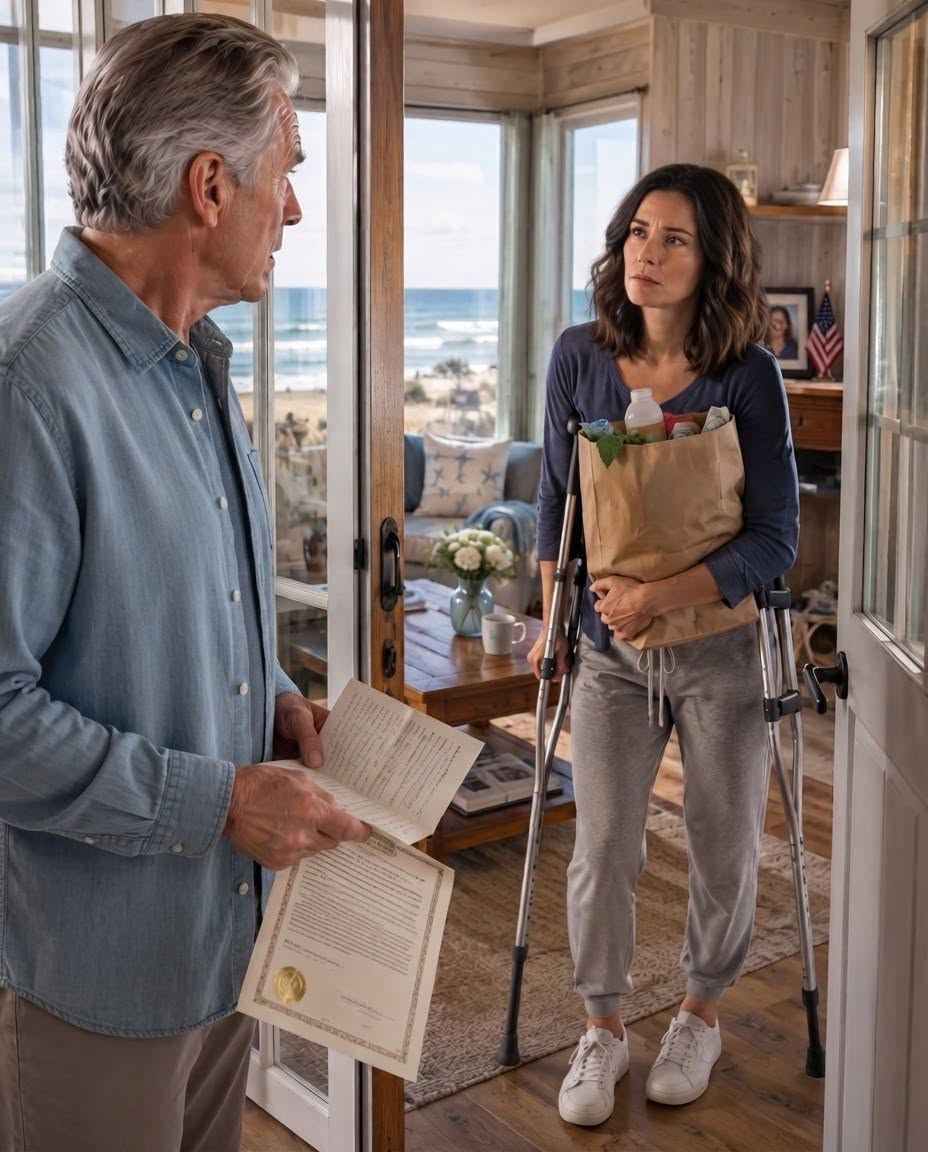
The front room was modest, with worn hardwood floors and a faded couch beneath the window. But the floors had been swept. A blue throw was folded neatly over one arm of the couch. Fresh yellow and white flowers sat in a mason jar on the coffee table, their stems freshly trimmed. A stack of mail rested beside a pair of reading glasses. Sunlight slipped through a gap in the curtains and stretched across a braided rug without a trace of dust.
Someone lived here.
I slowly set down my toolbox.
SEE NEXT PAGE >>>
To see the full cooking instructions, go to the next page or click the Open button (>) and don't forget to SHARE it with your friends on Facebook.