
If I did one thing right at the end, I hope it is this: I gave you the truth in a place quiet enough to receive it.
I know the cabin looks poor from the road. I wanted it that way. Bradley sees shine before substance. You always saw structure.
This little house has held my shame, my love, my fear, and my peace. It held Carol when I could not give her my name. It held me when I could no longer carry all my lies alone. Now I hope it holds you long enough to understand that I did love you, even when I failed you.
I pressed the letter against my chest and finally cried for my wife.
Not the restrained tears I had allowed myself during the funeral.
Not the measured grief of a man packing boxes while strangers removed his life from his home.
I wept for the frightened girl Helen once was, the mother she had been denied the chance to become, the wife who concealed too much, and the dying woman who tried to repair her family through legal documents because she no longer had time to do it aloud.
And I cried for myself.
For everything I had never known.
For everything I had been protected from and everything I had been denied.
Three months later, the cabin no longer looked the way it had when I first arrived.
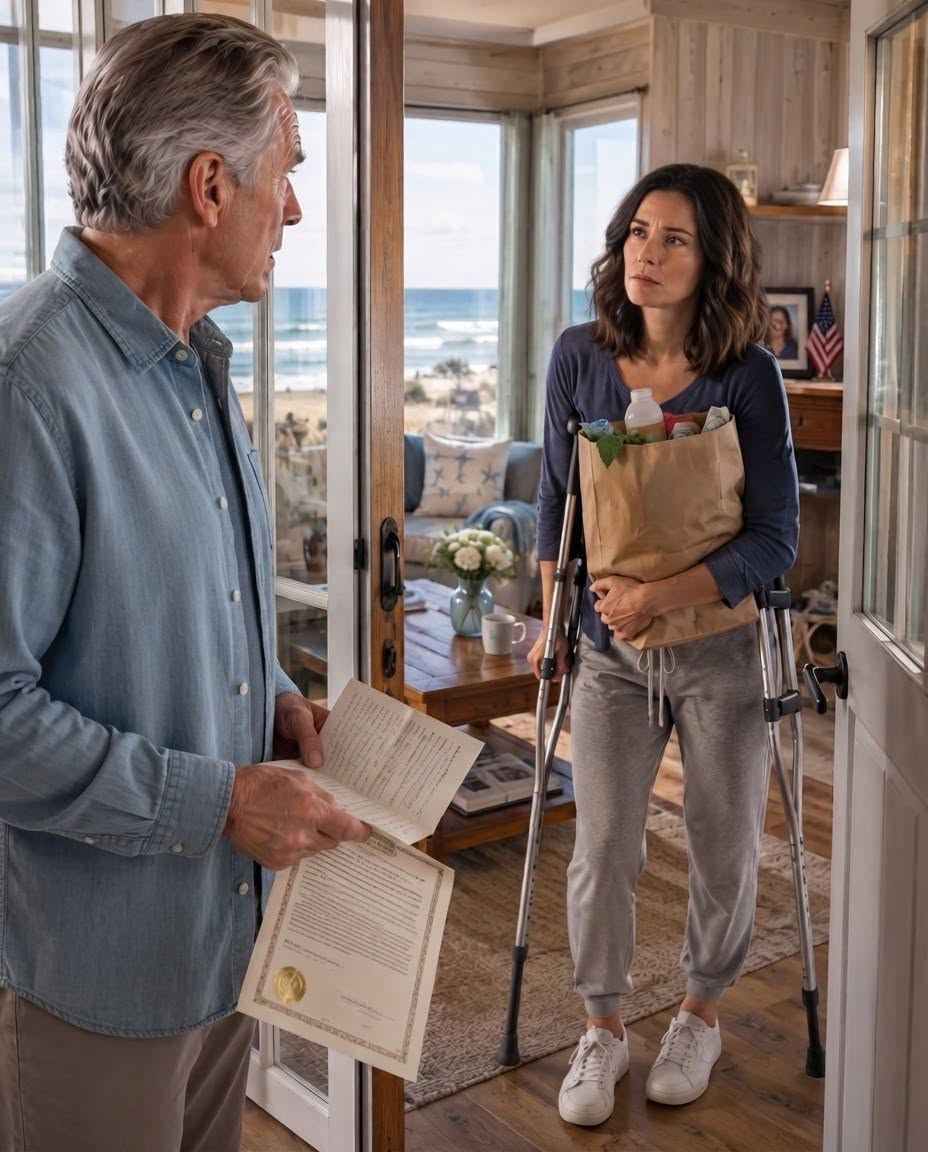
Not because it had been restored. It was gone. The redevelopment group completed the purchase, but before that happened, Carol and I walked through every room, packed every photograph, saved every letter, and carried away one final jar of flowers from the coffee table. I kept the old brass key after the deed was transferred. Some keys stop opening doors but still serve as reminders.
Carol purchased an accessible home twenty minutes inland, with wide doorways, a screened porch, and a bright kitchen that made her smile the moment she entered it. I bought a smaller place two streets away. Not from duty. From choice. After thirty years of learning that the family I believed I had was only part of the truth, I found unexpected comfort in discovering I had a daughter who enjoyed coffee on the porch, old films, and gentle arguments about whether soup qualified as dinner.
Bradley entered the program in Colorado.
During the first week, he called twice and tried to bargain. By the third week, his voice sounded different. Less rehearsed. More exhausted. By the sixth week, he apologized without offering excuses. By the ninth, he asked whether Carol might ever speak to him again.
“She gets to decide that,” I told him.
“I know,” he said.
That was new.
I learned that progress rarely arrives dramatically. Sometimes it is simply a selfish man asking a question without insisting on the answer he wants.
The villa was gone before Christmas.
Most of Bradley’s former life disappeared with it.
But he was alive, separated from the behaviors that had controlled him, and learning to follow a routine that did not bend around his excuses. The trust paid only what Helen had authorized. Nothing more. Nothing placed directly into his hands. Nothing easy enough to vanish.
On New Year’s Day, Carol arrived at my house carrying a pie she claimed to have baked herself, though the crust looked suspiciously professional. We sat at my kitchen table beneath a framed photograph of Helen laughing on the beach in her straw hat, one arm around Carol.
I had placed our wedding photograph beside it.
For a long time, I believed those two pictures could not exist in the same room. One showed the wife I had known. The other showed the woman who had lived an entire life beyond my view.
Eventually, I understood they were both Helen.
Not innocent.
Not a villain.
Human.
Carol noticed me studying the photographs.
“Do you forgive her?” she asked.
I breathed deeply.
Outside, palm leaves shifted in the January wind. Down the street, someone was taking down holiday lights. My new home smelled of coffee, pie, and the faint cedar oil I had rubbed into Helen’s wooden box that morning.
“I don’t know yet,” I said honestly. “But I understand her more than I did.”
Carol nodded.
“That might be enough for today.”
It was.
That evening, I opened the wooden box and placed the cabin key inside. Beside it, I added Bradley’s first letter from Colorado. Not because everything had been forgiven. Not because a tidy conclusion had appeared and repaired what secrecy, pride, and money had damaged.
Because rebuilding begins by preserving the right evidence.
Helen had left me a cabin that appeared worthless.
Inside, I discovered a daughter, a warning, a future, and the truth.
Bradley had laughed at the coastal shack because he could not recognize worth unless it was polished, valued, and placed directly into his hands.
Helen understood me better.
She knew I would unlock the door.
She knew I would examine the structure beneath the damage.
And somehow, she knew that if I survived the first impact of everything she had concealed, I might find my way toward the life she had desperately and imperfectly tried to leave for me.
It was not the family I had expected.
But sitting at my kitchen table with Carol’s pie cooling between us, Helen’s letters in the next room, and the ocean only twenty minutes away, I understood it was still a family with a chance.
For the first time since the reading of the will, I no longer felt discarded.
I felt chosen.
Late.
Imperfectly.
Painfully.
But chosen.
To see the full cooking instructions, go to the next page or click the Open button (>) and don't forget to SHARE it with your friends on Facebook.