

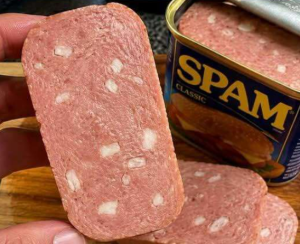
Seeing white lumps in Spam can be surprising, especially if you are expecting a perfectly uniform block of meat. But in nearly all ordinary situations, those pale pieces are simply solidified pork fat.
That fat is part of what gives the product its moisture, flavor, and texture. It becomes more visible when cold and less noticeable once cooked.
Before deciding whether to eat it, check the can carefully. Look for swelling, leaks, deep rust, major dents, or damage around the seams.
Then smell the product after opening it. If it smells normal and the meat looks typical aside from smooth white specks, there is usually no reason to panic.
Finally, examine the texture and color of the white pieces. Smooth, creamy, integrated bits are consistent with fat. Fuzzy, slimy, dark, green, gray, or isolated patches are not.
Food does not always look perfectly uniform, especially when it contains natural meat fat. A visual surprise does not automatically mean something is unsafe.
The key is knowing the difference between normal ingredients and real spoilage signs. Once you understand that distinction, those white specks become much less alarming.
If the can is sound, the smell is normal, and the white bits appear smooth and evenly distributed, the product can be sliced, fried, and enjoyed with confidence.
The white pieces are not a defect in most cases. They are simply part of the meat’s natural fat content, and they help make Spam taste and cook the way people expect.