
PART 3: WHAT HAPPENED NEXT BELONGED TO ME
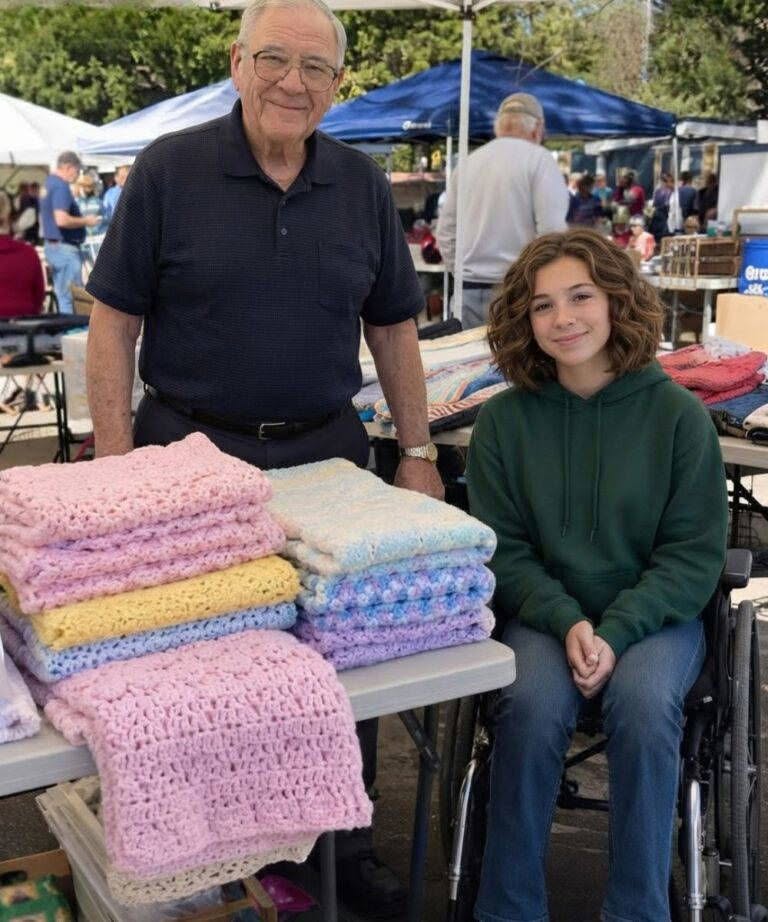
The adaptive quilts slowly became more than a small weekend project. Grandpa adjusted the designs based on my suggestions. Cole transported the finished products to markets and community events. I handled the prices, orders, expenses and customer requests. Every decision passed through me first. One customer asked for an insulated pocket for medication. Another wanted loops that could attach to a hospital bed. A mother requested a design for her son’s power wheelchair. I wrote down every idea.
For years, adults had spoken about my life as though I were not in the room. Doctors discussed my recovery with Grandpa. Insurance companies decided which treatments were necessary. Strangers told me I was inspirational for doing ordinary things. Grandpa had even decided that I did not need to know who my father was. Now people were asking for my opinion and waiting for my answer. One evening, Grandpa placed the money from another quilt sale on the table. I counted it once, then counted it again.
“You don’t trust me.”
“Not with the truth.”
His eyes dropped. The answer hurt him, but he did not argue. That was another change. Before Cole appeared, Grandpa would have explained why his decisions were necessary. He would have told me that everything he had done had been motivated by love. Now he was learning that an explanation was not the same as an excuse. I placed the money in the ledger.
“I do love you, Grandpa.”
“I know.”
“But loving you does not erase what you took away from me.”
“I know that too.”
Cole was standing near the doorway. I looked at him next.
“And a DNA test doesn’t make you my father overnight.”
“I understand.”
For months, both men had been learning the same lesson. They did not get to decide what I forgave. They did not get to choose what I forgot. They did not get to tell me whom I should consider family. Grandpa continued to care for me, but he stopped reaching for my wheelchair without asking. He reduced his hours at the grocery store and no longer stayed awake sewing until the middle of the night. When he became tired, he rested. When I needed help, I asked. Cole continued visiting, but he never tried to replace the years we had lost with expensive gifts or dramatic promises.
He told me about my mother. He explained that Hannah laughed whenever she became nervous. She hated olives, loved thunderstorms and once painted an entire bedroom yellow because she believed sunlight should exist even on rainy days. He also told me about his own failures. After learning that Hannah and the baby had supposedly died, he had fallen apart. He left town, abandoned friends and spent years moving between temporary jobs. He admitted he should have searched harder. He did not blame every mistake on Grandpa. That honesty made it easier to trust him.
Not completely, but enough to continue. Tessa also began coming to therapy again. After the crash, she had struggled to look at me without feeling guilty. I knew the accident was not her fault, but she had still pulled away whenever the memories became too painful. At the flea market, I reminded her of her promise not to disappear again. She kept it. During one session, she sat near the wall while I practiced turning with my walker.
“You’re staring.”
“I’m trying not to breathe too loudly.”
“That somehow makes it worse.”
She laughed. It was the first time we had laughed together about therapy. My progress was slow. Some days I could take several steps. On others, my legs refused to cooperate. I stopped treating every difficult day as a failure. The adaptive-quilt business continued growing. We created a simple name for it: Hannah’s Choice. Grandpa became quiet when he saw the name written across the first market sign.
“Why did you choose that?”
“Because she should have been allowed to make her own choices.”
He nodded.
“And because I’m making mine now.”
Part of every sale went toward my treatment. The rest was placed into a fund for people who needed mobility equipment or rehabilitation services their insurance would not cover. Cole helped connect us with motorcycle clubs that organized charity events. At first, Grandpa looked uncomfortable whenever men in leather vests approached our booth. I raised an eyebrow.
“You’re judging them based on their clothes again.”
He sighed.
“I suppose I deserved that.”
One of the clubs ordered twelve quilts for injured riders recovering from accidents. Another group raised enough money to pay for a young boy’s therapy sessions. What began with one sewing machine, a box of fabric and Grandpa’s desperate attempt to help me became something none of us had expected. But the biggest change was not the money. It was the way we treated one another.
Before entering my room, Grandpa knocked. Before attending an appointment, Cole asked. Before offering physical help, both of them waited. They were finally learning that loving someone did not give them ownership over that person’s decisions. One afternoon, nearly a year after Cole first appeared, I practiced walking across the therapy room again. Grandpa stood near one wall. Cole waited beside the door. Tessa watched from a chair. I placed both hands on the walker and moved forward.
One step, then another. My legs shook, and sweat gathered along my forehead. No one rushed to catch me. They trusted me to say what I needed. Halfway across the room, my left knee weakened. I stopped. Grandpa’s hands moved slightly, but he remained where he was. Cole did the same.
SEE NEXT PAGE >>>
To see the full cooking instructions, go to the next page or click the Open button (>) and don't forget to SHARE it with your friends on Facebook.