
Then the conversation turned to family. Someone mentioned a cousin’s new baby.
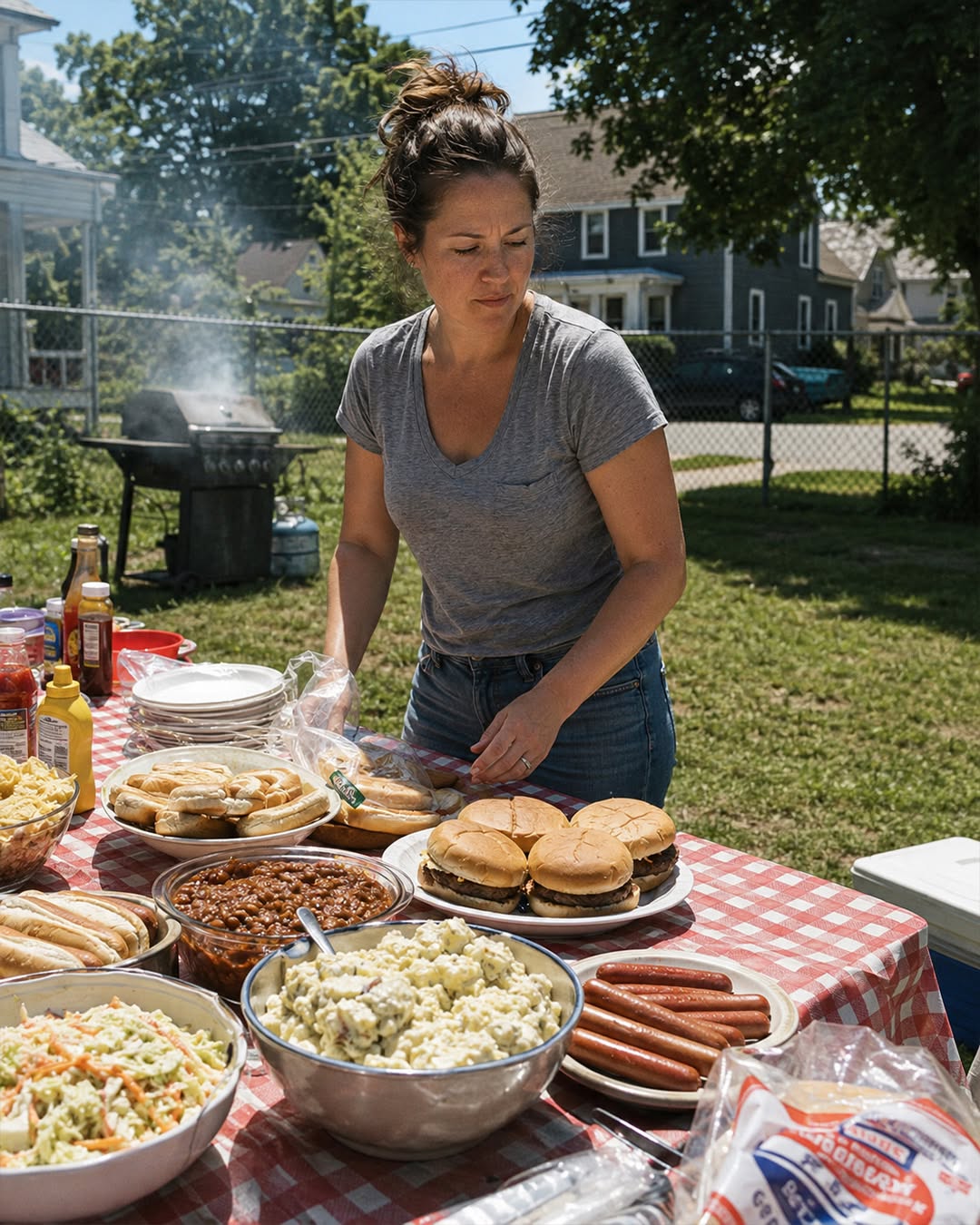
Barbara leaned forward, glass in hand, voice pitched for the whole yard. “Family is everything,” she said. “Blood is everything.”
She looked directly at me. The table went quiet for half a second. That particular quiet that happens when everyone knows something is about to land.
“Honestly, Clara, if you vanished tomorrow, nobody would even miss you.”
The laugh came from everywhere. Connor’s was short and breathy. Chloe’s was loud and sharp. Uncle Stan’s rolled deep like he had been waiting for the punchline all afternoon. Neighbors. Cousins. Church friends. Even people who had just eaten my biscuits.
I looked at my plate. Hot dog. Mustard. Relish.
I picked it up, took one slow bite, and looked at Barbara.
“We’ll see.”
She blinked. Then someone said something about the Patriots preseason, and the table moved on. Nobody looked at me again. They did not need to.
I had already decided.
We drove home in silence. Connor turned on the radio. Some country station, something about a tailgate and a girl. He hummed along like nothing had happened.
By ten, he was asleep on the couch with the remote on his chest and a drink going flat on the end table.
I stood in the kitchen doorway and watched him breathe.
Three years. Three years of “she doesn’t mean it.” Three years of macaroni salad credit and barbecue sauce on my laptop bag and being told I was a guest in a family I had been feeding, funding, and holding together with both hands.
I moved quietly. One suitcase. My laptop. Chargers. My passport. Birth certificate. Savings account printout. A week’s worth of clothes.
The framed photo of my mother from the nightstand, the one where she was laughing at something my dad had said, her head thrown back, her hand on his arm.
I left my wedding ring on the kitchen counter next to the salt shaker. I did not write a note. There was nothing left to explain to someone who had spent three years not listening.
At two in the morning, I pulled out of the driveway with the headlights off until I reached the main road.
At the gas station on Route 1, I parked under the fluorescent lights and blocked every Miller number in my phone. Connor. Barbara. Chloe. Uncle Stan. Every cousin. Every church contact who had laughed at that table.
Then I looked at myself in the rearview mirror. Eyes dry. Jaw set.
I said it out loud just to hear it: “We’ll see.”
The road west was empty. I turned the radio to something without words and drove until Blackwood was nothing but a name on a sign I had already passed.
The motel outside Concord, New Hampshire, smelled like carpet cleaner and stale smoke from years before. I sat on the edge of the bed at six in the morning with my suitcase unopened and my laptop balanced on my knees.
The full weight of what I had done landed on me like a bag of gravel. No family. No husband. No in-laws who had called to check on me. That last one felt more like relief than loss.
I had a suitcase, a laptop, and a savings account that would stretch three months if I did not do anything reckless.
I cried hard, the kind of crying I had not done since the hospital hallway where I signed my mother’s hospice paperwork alone.
But I was not crying about Barbara. I was crying about my mom, about the fact that she would have grabbed me by the shoulders at year one and said, “Baby girl, you get in that truck and you drive.”
She would have been right. I should have listened to the ghost of her sooner.
When the crying stopped, I washed my face, opened my laptop, and got to work.
Savings account: $14,200. Enough for first and last month’s rent, plus three months of expenses if I ate simply and bought nothing I did not need.
I searched Burlington rentals, the same listings I had browsed before. There was a studio above a print shop on Church Street. Available immediately. Seven hundred dollars a month. Utilities included.
I emailed the landlord. Then I opened the Maine court website and filed a divorce petition. Uncontested. No children. No shared business. The form took forty minutes.
My first freelance email came in at 8:15. A regular client in Blackwood needed a logo revision for their fall menu. I finished it in two hours, invoiced seventy-five dollars, and closed the laptop.
Still working. Still standing.
Two weeks later, I was standing in a studio apartment on Church Street in Burlington, Vermont, holding a coffee mug with nothing else in the room except a folding table, a chair from Goodwill, and a view of the Green Mountains through a window that actually opened.
The space was four hundred square feet. It smelled like ink and old paper from the print shop downstairs. The floors were scratched hardwood. The radiator clanked when it kicked on. I loved it immediately.
The print shop owner was a woman named Maureen, mid-fifties, divorced, silver hair cut short, reading glasses permanently pushed up on her forehead, and a voice like she had been giving directions her whole life and expected people to follow them. She ran the shop alone.
The first morning, she was pulling a tray of freshly printed wedding invitations when I came down for coffee. She looked me over: suitcase-sized bags under my eyes, wrinkled shirt, laptop clutched like a life raft.
“Morning,” she said. “You the new tenant?”
“Yes, ma’am.”
“Maureen. You drink coffee?”
“Yes, ma’am.”
That was it. No interrogation. No pity. No asking where I had come from or why I looked like I had driven through the night. Just coffee and a door left open.
I spent that first month reaching out to every small business in walking distance. Restaurants. Galleries. A craft brewery with a logo that looked like it had been made in a middle school computer class.
I offered branding packages at rates I could barely afford to charge. Two clients signed by the end of the month. It was not much. But it was mine.
Bethany texted me on a Tuesday afternoon.
Bethany Whitfield was the head librarian at the Blackwood Public Library and the one person in town who had never been to a Miller cookout. She was just someone who had stamped my book returns and eventually started recommending novels she thought I would like. I had not blocked her because she had never given me a reason to.
Connor came to the library today, she wrote. Asked if I knew where you were. He looked rough. Hasn’t shaved. Hasn’t slept, from the looks of it.
I stared at the message for a long time before I typed back: What did you tell him?
That I didn’t know. Because I don’t. Not officially.
Then she sent a longer message: The shop website went down last week. Nobody knows the hosting login. Connor’s been calling the internet company trying to get it restored, but they keep telling him they need the account holder’s email, which is yours.
I did not respond to that one. A minute later, another text came.
The August cookout happened. Or tried to. Barbara attempted everything herself. Burned the chicken. The macaroni salad tasted like someone had read a recipe once and given up halfway through. Only twelve people came. Uncle Stan said the meat was dry.
I read it twice. I expected to feel satisfaction. Maybe guilt. What I felt was quieter than that. A tired recognition, like watching someone trip over the same crack in the sidewalk I had been stepping over for three years.
Also, Bethany added, Barbara’s telling the church you had some kind of personal breakdown and left because of “issues.”
I typed back: Let her.
One more text came: Connor moved back in with Barbara. He couldn’t keep up the house alone. Mortgage payments.
I closed the app, poured myself coffee, and went back to work.
Month three, the boutique inn on College Street called.
Helen Vance, the owner, was sixty-eight, a former school principal who had retired into hospitality the way some women retire into gardening. She had seen my business card pinned to the bulletin board at Maureen’s print shop.
She needed a full rebrand. Logo. Website. Signage. Room key cards. Breakfast menu design. She had a budget of $4,500 and a vision she could not articulate beyond “warm but sophisticated, like a good bourbon.”
I spent two weeks on the pitch. Three concept boards. Font pairings. Color stories pulled from the mountains outside her lobby windows.
I presented them at her dining table on a Thursday morning while she served coffee in a cup with a chipped handle. She studied the boards in silence for a full minute.
Then she looked up and said, “Honey, this is exactly what I imagined but couldn’t put into words. Where have you been hiding?”
I almost laughed. Hiding was exactly what I had been doing.
SEE NEXT PAGE >>>
To see the full cooking instructions, go to the next page or click the Open button (>) and don't forget to SHARE it with your friends on Facebook.