

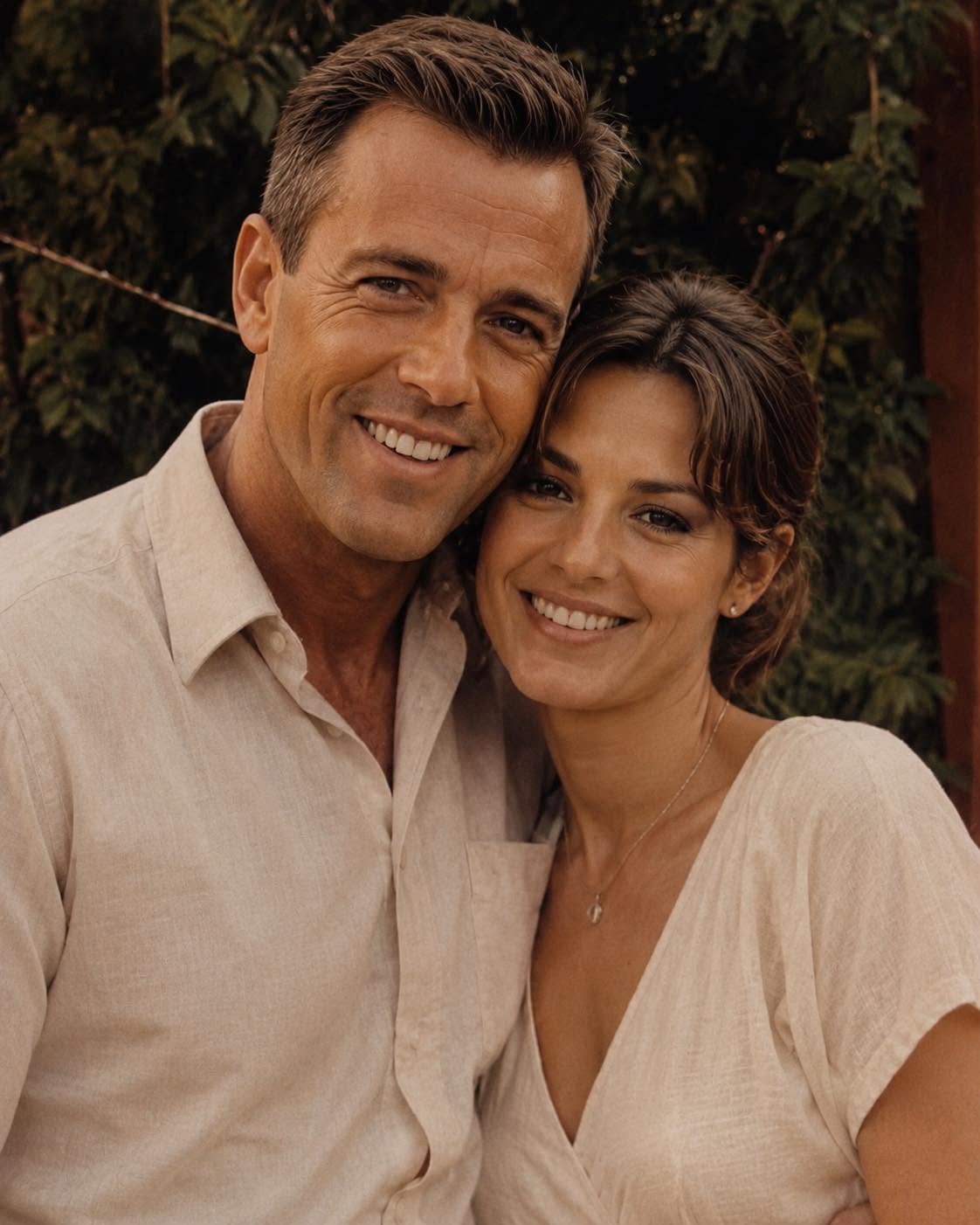
But still Margaret.
Still the girl who had laughed in the rain at nineteen and kissed me behind a grocery store.
The sight nearly undid me.
I moved to her bedside and took her hand with great care, as though fifty years could bruise between us.
“I came as fast as I could.”
“I know.”
I sat there for a long time without speaking.
I simply looked at her and let the impossible truth of her presence settle inside me.
Her eyes filled.
Then mine did too.
Suddenly, we were both old and crying like people in mourning.
“I thought I might miss you,” I finally said.
“You almost did,” she replied, smiling faintly.
Later that afternoon, the doctor asked to speak with Ellen and me in the hallway.
His words were gentle.
So gentle that I understood before he finished that they would not rescue us.
They could keep Margaret comfortable.
They could give her a little time.
But not much.
Perhaps days.
A week, if we were fortunate.
I stared at the floor tiles as he spoke because looking at his face would have made the truth real too quickly.
After he left, Ellen wiped her eyes.
“She’s been weaker than she admitted on the phone.”
The knowledge hurt in a new way.
Ellen nodded.
“She knew enough to take her medications, but we didn’t know it had gotten so bad.”
I thought about all our evening conversations.
The tenderness.
The urgency I had mistaken for simple honesty between two people near the end of life.
Margaret must have known that time was narrowing and still waited for me to come by my own choice.
I loved her more for that.
And hated the world a little.
I rented a room in a motel near the hospital and spent every day beside her.
We tried to speak through fifty missing years with the hunger of people finally allowed to talk after a lifetime of interruption.
She told me about Ellen’s birth, her marriage, the years after her husband died, and the way she learned to live with loneliness without becoming bitter.
I told her about the jobs I had worked, the towns where I had lived, the women I had never married, and the quiet outline of my existence.
I told her that no matter what my hands had been busy doing, some part of me had always remained with her.
Once she said, “I would have been poor with you, Harrison. I don’t think I would have minded.”
“I was too foolish and proud to realize that. I know now,” I replied.
Ellen came and went, bringing coffee, making calls, and handling the terrible practical machinery that begins moving the moment death enters a room.
Between those tasks, she and I talked.
At first, carefully.
SEE NEXT PAGE >>>
To see the full cooking instructions, go to the next page or click the Open button (>) and don't forget to SHARE it with your friends on Facebook.